Complete Guide to LRF Module Divergence Angle — How to Choose the Right Beam Spread for Your Application
What Is Divergence Angle in an LRF Module?
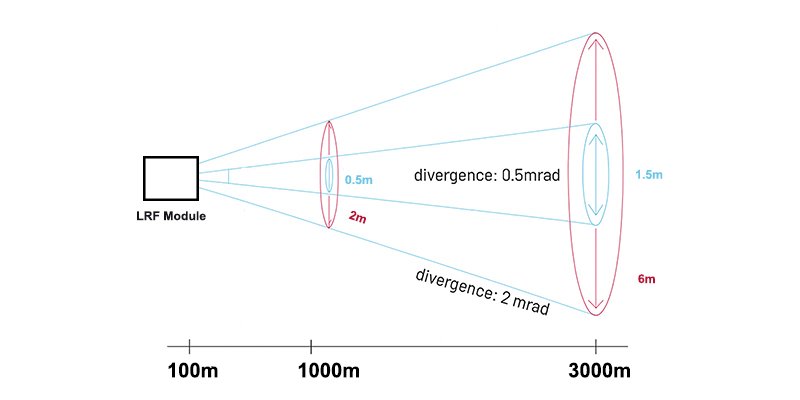
The divergence angle of a Laser Rangefinder (LRF) module describes how much the laser beam spreads out as it travels over distance. It is typically measured in milliradians (mrad).
A smaller divergence angle produces a narrower beam over long distances, allowing precise targeting of small or distant objects. A larger divergence angle creates a wider beam, which may be more forgiving for moving or large targets but less precise for pinpoint measurements.
How to Calculate Divergence Angle
Divergence angle can be estimated using the formula:
Beam Diameter at Distance = Initial Beam Diameter + (Divergence × Distance)
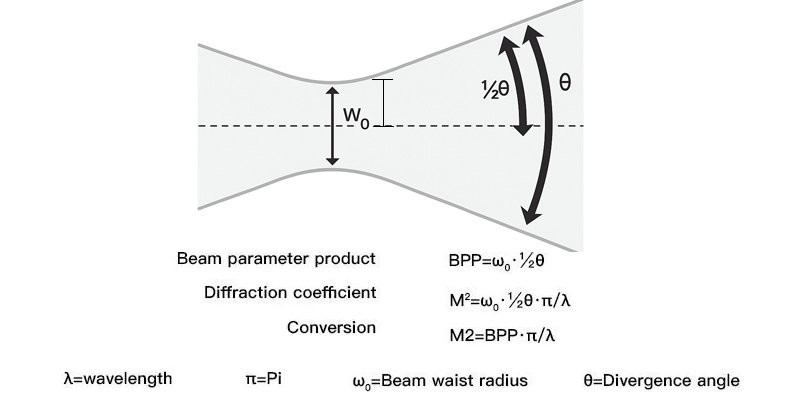
For example:
- If a LRF Module has a divergence of 1 mrad, the beam will expand by 1 meter for every 1,000 meters traveled.
- At 3 km, that beam would be 6 meters wider than at the origin.
Why Divergence Angle Matters
The divergence angle affects several key aspects:
- Measurement Accuracy – Narrow beams allow precise detection of small targets.
- Signal Strength – Less divergence means more concentrated energy reaching the target.
- Environmental Performance – Lower divergence improves performance in fog, rain, or dust.
- Target Recognition – Wider beams may capture more background noise, affecting accuracy.
Recommended Divergence Angles by Application
- Long-Range Precision (Surveying, Military Targeting) → 0.3–0.8 mrad
- Medium-Range with Moderate Accuracy (Industrial Automation, Vehicle Detection) → 1–2 mrad
- Short-Range Wide Coverage (Object Scanning, Collision Avoidance) → 2–5 mrad
How to Choose the Right Divergence Angle
- Consider Your Target Size – Small targets require a tighter beam.
- Consider Your Operating Distance – Long distances benefit from low divergence.
- Consider Environmental Conditions – Low divergence performs better in challenging conditions.
- Balance with Detector Sensitivity – Ensure your sensor can detect the beam at the chosen divergence.
Conclusion

Understanding divergence angle is essential for choosing the right LRF module for your application. Whether you need pinpoint accuracy or broad coverage, selecting the proper beam spread will maximize measurement performance.
FAQ
1. What is the divergence angle of an LRF module?
The divergence angle refers to how much the laser beam spreads as it travels away from the source. A smaller divergence angle means the beam stays more concentrated over long distances, which can improve measurement performance.
2. Why is divergence angle important for laser rangefinder modules?
The divergence angle directly affects measurement accuracy, detection capability, and target resolution. Choosing the right beam spread helps ensure stable and reliable distance measurements in different environments.
3. What is a typical divergence angle for laser rangefinder modules?
Most laser rangefinder modules have a divergence angle ranging from about 0.5 mrad to several milliradians, depending on the optical design and intended application.
4. How does divergence angle affect long-distance measurements?
For long-range measurements, a smaller divergence angle is usually preferred because the laser beam remains more focused, allowing the sensor to detect distant targets more effectively.
5. When is a larger divergence angle beneficial?
A larger divergence angle can be useful when measuring wider surfaces or when target alignment is difficult, as the wider beam increases the chance of hitting the object.
6. How do you choose the right beam divergence for your application?
The selection depends on several factors, including measurement distance, target size, environmental conditions, and system integration requirements.
7. What divergence angle is best for long range laser rangefinder modules?
For long range applications, a narrow divergence angle is generally preferred because it keeps the beam focused over greater distances, improving detection capability and measurement stability.