
What Is a Laser Distance Sensor and How Does It Work?
Lazer Mesafe Sensörü Nedir?
A lazer distance sensor is a device used to measure the physical distance between the sensor itself and a target object. Among various distance measurement technologies, the laser measurement sensor has become one of the most widely used solutions due to its high accuracy, fast response, and strong adaptability to industrial and outdoor environments.
A laser-based measuring sensor works by emitting a laser beam toward a target surface and analyzing the reflected signal to calculate distance. Compared with ultrasonic or infrared solutions, laser sensors offer longer measurement ranges, higher precision, and better resistance to environmental interference.
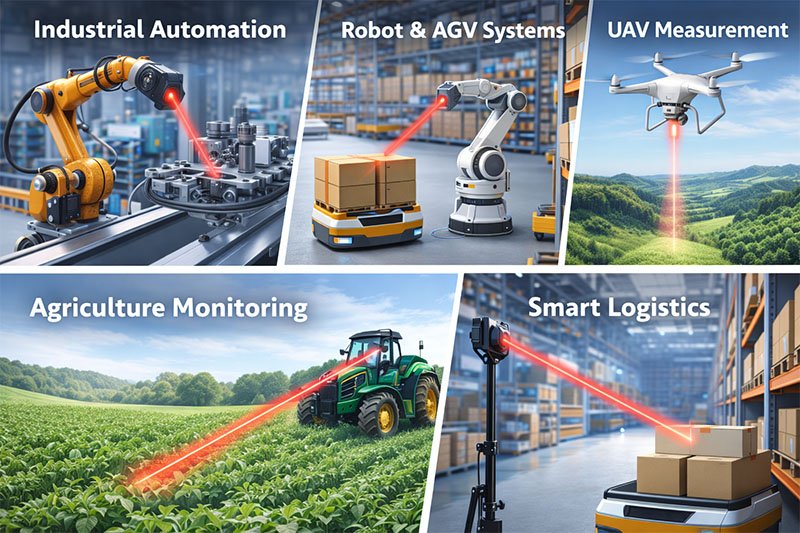
Today, laser-based distance measurement technology is widely applied in industrial automation, robotics, UAV systems, logistics, smart agriculture, and intelligent transportation systems.

How a Laser Distance Sensor Works
At its core, a lazer mesafe sensörü operates by transmitting a laser signal and receiving the reflected light. The system calculates distance based on optical principles. There are two main working methods commonly used in laser sensors.
Phase-Shift Measurement Technology
Phase-shift measurement is commonly used in short-range and high-precision distance measuring sensor applications. In this method, the laser beam is modulated at a specific frequency. When the reflected signal returns, the phase difference between the transmitted and received signal is analyzed to determine distance.
This approach is widely used in compact lazer mesafe modülü designs that require millimeter-level accuracy over ranges such as 0.03 m to 200 m. Phase-shift sensors are popular in industrial automation, object positioning, and robotic guidance.

Time-of-Flight (Pulse) Measurement Technology
Time-of-Flight (ToF), also known as pulse measurement, calculates distance by measuring the time it takes for a laser pulse to travel to the target and back. This method is ideal for long-range measurement.
A lazer telemetre modülü typically uses pulse-based ToF technology and is designed for distances from hundreds of meters to several kilometers. These modules are widely used in UAV altitude measurement, surveying, mapping, and outdoor monitoring systems.

Key Components of a Laser Distance Module
A modern laser measurement sensor integrates multiple functional components into a compact structure:
- Laser emitter (visible or infrared)
- Optical receiving system
- Signal processing circuit
- Distance calculation algorithm
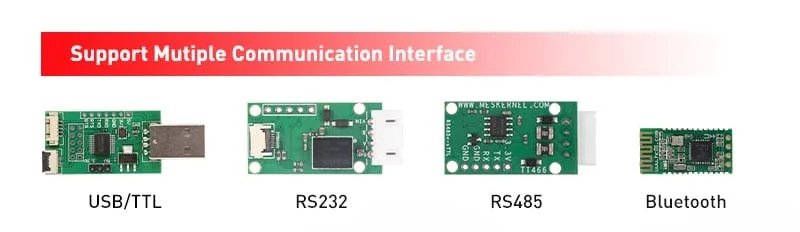
- Communication interface (UART, RS232, RS485, USB, etc.)
This modular design allows laser measurement sensor to be easily embedded into various systems such as PLCs, microcontrollers, UAVs, and embedded platforms.
Laser Distance Sensor vs Other Distance Sensor Technologies
Compared with other distance measuring sensor technologies, laser measurement sensor offer several advantages:
- Daha yüksek doğruluk: laser measurement sensor can achieve millimeter-level precision.
- Longer range: Laser-based measurement supports both short-range and long-range applications.
- Hızlı yanıt: Ideal for dynamic and real-time measurement scenarios.
- Temassız ölçüm: No physical wear or mechanical interference.
Traditional ultrasonic measurement sensor are often limited by air conditions and short measurement ranges, while infrared sensors may struggle with surface reflectivity. Laser measurement sensor provide a more reliable and scalable solution across diverse environments.
Typical Applications of Laser Distance Sensors
Endüstriyel Otomasyon
In industrial environments, distance measuring sensors are used for position detection, object alignment, material handling, and automated inspection. Compact laser distance measuring sensor enable precise measurement even in tight installation spaces.
Robotik ve AGV Sistemleri
Robots and automated guided vehicles rely on laser measurement sensor for obstacle detection, navigation, and positioning. High-precision distance measurement improves motion control and operational safety.
UAV and Aerial Systems
For UAV applications, pulse-based lazer telemetre modülleri are commonly used to measure altitude, terrain clearance, and landing distance. These sensors provide stable performance in outdoor and long-range conditions.
Akıllı Lojistik ve Depolama
laser measurement sensor are widely applied in logistics systems for package height detection, pallet positioning, and automated storage solutions, improving efficiency and reducing error rates.
Smart Agriculture and Infrastructure
In agriculture and infrastructure monitoring, distance measuring sensors support crop height measurement, terrain mapping, and structural monitoring, enabling smarter and data-driven decision making.
Choosing the Right Laser Distance Sensors
When selecting a laser measurement sensor, several factors should be considered:
- Measurement range
- Accuracy and resolution
- Output interface compatibility
- Environmental resistance
- Size and integration requirements
For short-range, high-precision tasks, a phase-based laser measurement sensor is usually the best choice. For long-range outdoor measurement, a pulse-based laser rangefinder module is more suitable.
Understanding the specific application scenario helps ensure optimal sensor performance and long-term system stability.
Future Trends in Laser Distance Measurement
With advances in optoelectronics and signal processing, laser measurement sensors are becoming smaller, more accurate, and more energy-efficient. Integration with AI, edge computing, and smart control systems will further expand their application potential.
As automation and intelligent systems continue to evolve, the demand for reliable and precise distance sensor solutions will continue to grow globally.
Sonuç
A laser distance sensor is a powerful and versatile measurement sensor solution that combines high precision, fast response, and broad application coverage. From compact laser distance modules used in industrial automation to long-range laser rangefinder modules designed for UAV and outdoor systems, laser-based distance measurement technology plays a critical role in modern sensing applications.
By understanding how laser sensors work and selecting the right technology for each use case, businesses and engineers can achieve more accurate, efficient, and intelligent measurement systems.
FAQ
What is a laser distance sensor used for?
It is used to measure the distance between a device and an object without contact, commonly in automation, robotics, UAVs, and monitoring systems.
How does laser distance measurement work?
It calculates distance by emitting a laser signal and analyzing the reflected light using optical measurement principles.
Is laser distance measurement accurate?
Yes. Short-range systems can achieve millimeter-level accuracy, while long-range systems provide stable measurement over hundreds of meters or more.
Can it be used outdoors?
Yes. Many laser-based solutions are designed to perform reliably in outdoor and high-light environments.
How do I choose the right solution?
Select based on required range, accuracy, environment, and system integration needs.