
Bridge Monitoring Methods Comparison: Traditional vs Modern Approaches
As global infrastructure continues to age, ensuring bridge safety has become a top priority for engineers and governments. One of the most important decisions in infrastructure maintenance is choosing the right monitoring strategy. This bridge monitoring methods comparison explores the differences between traditional inspection techniques and modern monitoring technologies, helping engineers select the most effective solution for long-term structural health.

Understanding Bridge Monitoring Methods
Bridge monitoring involves measuring structural behavior such as displacement, vibration, and stress over time. These measurements are essential for detecting early signs of damage and preventing structural failure.
In this bridge monitoring methods comparison, monitoring techniques can generally be divided into two categories: traditional bridge monitoring methods and modern technology-based solutions.
Traditional Bridge Monitoring Methods
Traditional bridge monitoring methods have been used for decades and remain common in many projects. However, they come with several limitations.
Manual Inspection
Manual inspection relies on engineers conducting on-site evaluations using visual checks and basic tools. While this method is simple and cost-effective, it lacks precision and cannot provide continuous monitoring data.
Additionally, manual inspection depends heavily on human experience, which may lead to inconsistent results.
Contact-Based Sensors
Devices such as LVDTs and strain gauges are widely used in traditional bridge monitoring methods. These sensors are attached directly to the structure to measure displacement or stress.
Although they can provide accurate data, installation is often complex and time-consuming. Maintenance is also required, especially in outdoor environments where sensors are exposed to weather and physical wear.
Modern Bridge Monitoring Technologies
Modern monitoring solutions are transforming how infrastructure is managed. In this bridge monitoring methods comparison, advanced technologies offer clear improvements in accuracy, efficiency, and data availability.
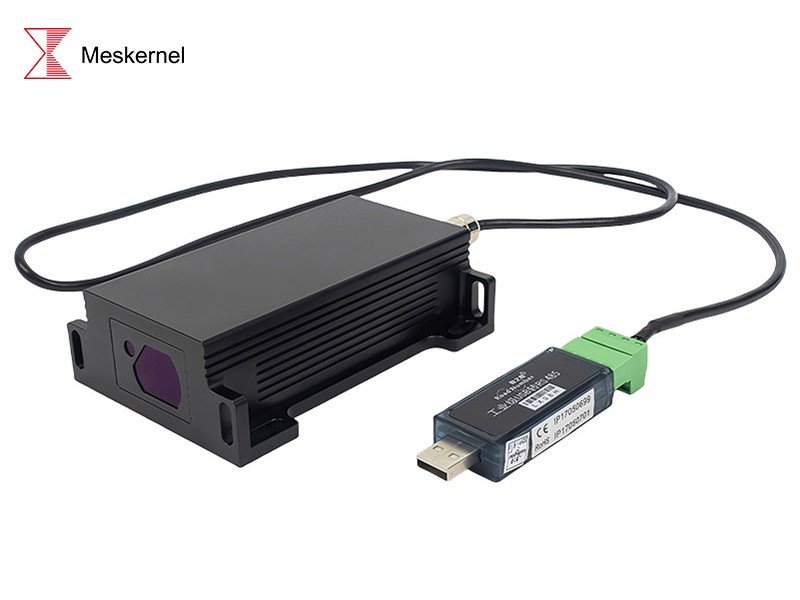
Laser distance sensor for structural monitoring Systems
Laser distance sensor for structural monitoring to measure structural changes without physically attaching sensors to the bridge. This significantly reduces installation complexity and improves system durability.
Real-Time Data Monitoring
Modern bridge monitoring technology enables continuous data collection. Engineers can track structural behavior in real time, making it easier to detect abnormalities and respond quickly.
High-Precision Measurement
Advanced systems provide millimeter-level accuracy, allowing detection of even minor structural changes. This level of detail is critical for long-term structural health monitoring systems.
Remote and Automated Operation
Modern solutions support remote monitoring and automated data analysis. This reduces the need for frequent site visits and improves overall operational efficiency.
Bridge Monitoring Methods Comparison: Key Differences
To better understand the advantages of each approach, this bridge monitoring methods comparison highlights the main differences between traditional and modern solutions.

Accuracy
Traditional bridge monitoring methods often rely on periodic measurements, which may miss small changes. Modern systems provide continuous and highly accurate data, improving early detection of structural issues.
Installation and Maintenance
Traditional methods require physical installation and regular maintenance. In contrast, modern bridge monitoring technology is easier to deploy and requires less upkeep.
Data Availability
Traditional monitoring provides limited data collected at intervals. Modern systems deliver continuous data streams, enabling deeper analysis and better decision-making.
Safety
Manual inspection can expose workers to risks, especially in high or hard-to-reach areas. Modern monitoring reduces the need for direct access, improving safety conditions.
Cost Efficiency
While traditional methods may have lower upfront costs, they often involve higher long-term expenses due to labor and maintenance. Modern systems offer better long-term value through automation and efficiency.
Choosing the Right Monitoring Method
This bridge monitoring methods comparison shows that the best solution depends on project requirements.
Traditional bridge monitoring methods may still be suitable for small-scale or short-term projects. However, for large infrastructure systems requiring continuous monitoring, industrial laser distance sensor technology provides clear advantages.
In many cases, engineers are adopting hybrid approaches that combine traditional inspection with modern monitoring systems for optimal results.
Conclusion
As infrastructure systems become more complex, selecting the right monitoring strategy is more important than ever. This bridge monitoring methods comparison demonstrates that modern technologies offer significant improvements in accuracy, safety, and efficiency.
While traditional methods still have their place, the shift toward advanced monitoring solutions is accelerating. Engineers who adopt modern approaches will be better equipped to ensure long-term bridge safety and performance.
FAQ
Q1: What is the purpose of a bridge monitoring methods comparison?
It helps engineers evaluate different monitoring techniques and choose the most suitable solution for specific projects.
Q2: Are traditional bridge monitoring methods still useful?
Yes, they are still used in small or budget-limited projects, but they have limitations in accuracy and data continuity.
Q3: What are the advantages of modern bridge monitoring technology?
Modern solutions offer real-time data, higher accuracy, and reduced maintenance requirements.
Q4: Can traditional and modern methods be used together?
Yes, hybrid systems are increasingly common and combine the strengths of both approaches.