고주파 레이저 거리 센서: 30Hz 이상은 언제 필요할까요?

고주파 레이저 거리 센서: 30Hz 이상은 언제 필요할까요?

In modern industrial automation and smart systems, measurement speed is becoming just as important as measurement accuracy. While traditional laser distance sensors operating at low frequencies are sufficient for static or slow-moving targets, many applications today require faster response times and real-time feedback. This is where a High Frequency Laser Distance Sensor becomes essential.

This article explains what high-frequency measurement really means, when 30Hz or higher is necessary, and how to choose the right solution for demanding applications.

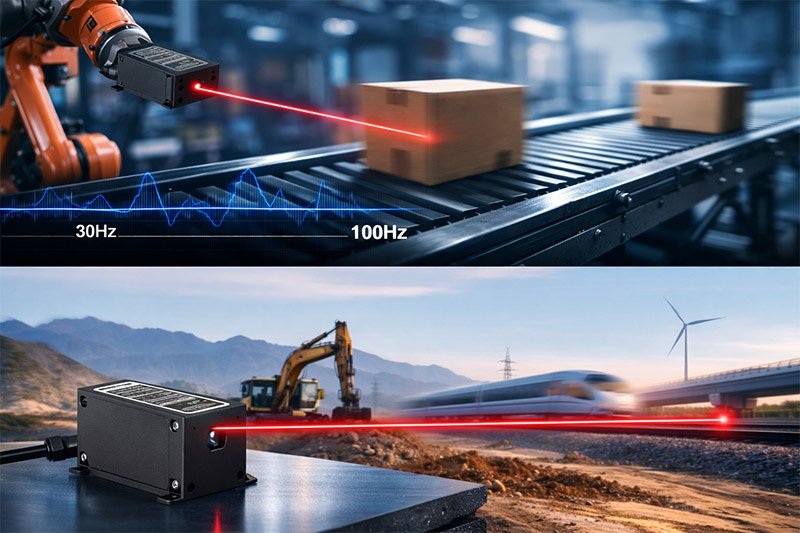
High Frequency Laser Distance Sensor for automatic

What Is a High Frequency Laser Distance Sensor?

A High Frequency Laser Distance Sensor refers to a sensor capable of performing distance measurements at a refresh rate of 30Hz or higher. In practical terms, this means the sensor can output 30 or more distance values per second, enabling real-time tracking of moving objects.

Compared with standard sensors operating at 5Hz or 10Hz, high-frequency models significantly reduce latency and improve responsiveness. This makes them ideal for dynamic environments where distance changes rapidly.

High-frequency performance is often combined with compact design, stable signal processing, and precise algorithms, allowing both speed and accuracy to coexist.

Why Measurement Frequency Matters

Measurement frequency directly affects how accurately a system can respond to motion. When a target moves quickly, a low update rate may miss critical position changes, resulting in delayed reactions or control errors.

A high frequency laser distance sensor enables:

  • Faster feedback loops in control systems
  • Improved motion tracking accuracy
  • Reduced data interpolation and prediction errors
  • Better synchronization with automation controllers

In short, higher frequency means more reliable real-time distance information.

When Do You Need 30Hz or More?

Not every application requires high-speed measurement. However, once targets are moving or systems require immediate response, 30Hz becomes a practical baseline.

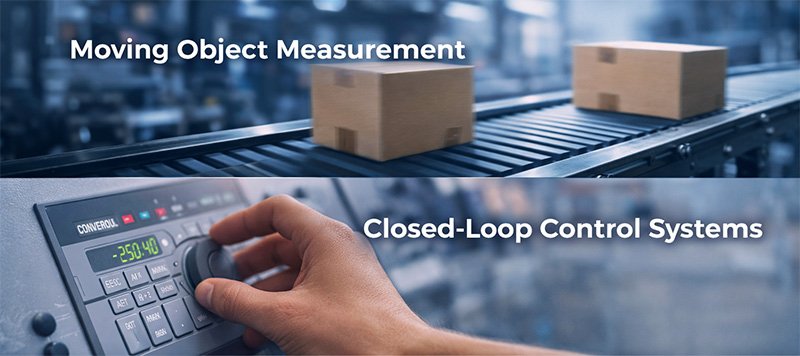
Moving Object Measurement

Applications involving conveyors, robotic arms, or sliding mechanisms often require continuous distance updates. A refresh rate of 30Hz or more ensures smooth motion tracking without noticeable lag.

Closed-Loop Control Systems

In closed-loop automation systems, distance data is used directly for feedback control. A higher update rate allows controllers to adjust faster, improving stability and precision.

Dynamic Positioning and Alignment

In positioning tasks where alignment changes continuously, such as automatic sorting or stacking, high-frequency measurement prevents overshoot and misalignment.

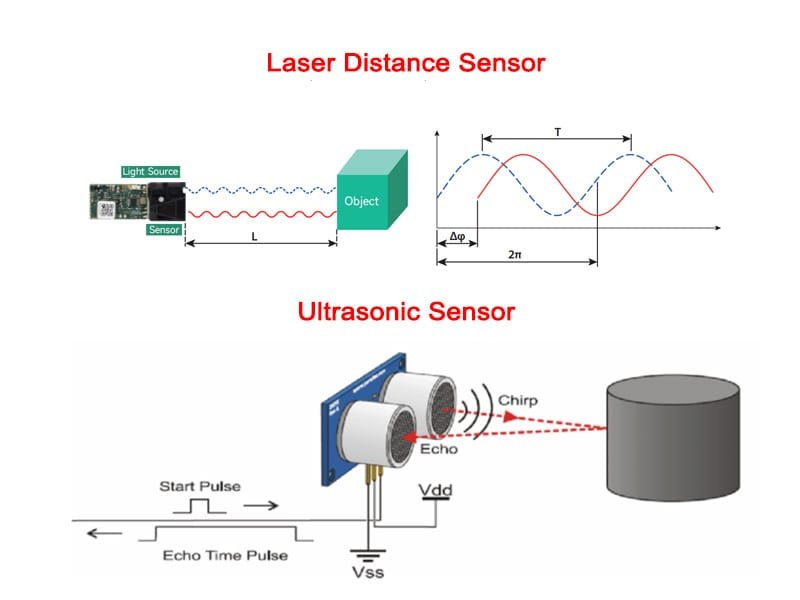
laser distance sensor for automation

Typical Applications for High Frequency Sensors

A high frequency laser distance sensor is commonly used in the following fields:

산업 자동화

High-speed production lines rely on rapid distance measurement to maintain throughput and consistency. Sensors with higher frequencies improve synchronization between machines.

Robotics and AGV Systems

Robots and automated guided vehicles require fast distance updates for navigation, obstacle avoidance, and precise positioning.

Logistics and Warehouse Automation

In automated storage and retrieval systems, fast measurement improves efficiency and reduces collision risks.

Precision Motion Monitoring

Applications such as vibration monitoring or dynamic displacement analysis benefit from higher sampling rates and stable output.

laser distance sensor applications

Frequency vs Accuracy: Do You Have to Choose?

A common misconception is that increasing measurement frequency compromises accuracy. In reality, modern sensor designs can achieve both high speed and high precision.

Advanced signal processing and optimized hardware allow a high speed laser distance sensor to maintain millimeter-level accuracy even at elevated refresh rates. The key is selecting a sensor designed specifically for high-frequency operation rather than pushing a low-speed model beyond its limits.

Key Factors to Consider When Selecting a High Frequency Sensor

Before choosing a sensor, consider the following technical factors:

Measurement Stability

High-frequency output must remain stable and repeatable. Noise reduction and filtering algorithms play a critical role.

통신 인터페이스

Fast measurement requires equally fast data transmission. Interfaces such as UART, RS485, or industrial protocols are commonly preferred.

환경 적응성

Ambient light, dust, and surface reflectivity can affect performance. A reliable sensor should maintain accuracy under real-world conditions.

Size and Integration

Compact sensors are easier to integrate into space-constrained systems without sacrificing performance.

Introducing the LDL-T High Frequency Laser Distance Sensor

For applications that require both speed and precision, the LDL-T High Accuracy Laser Distance Sensor is designed to meet demanding industrial requirements.

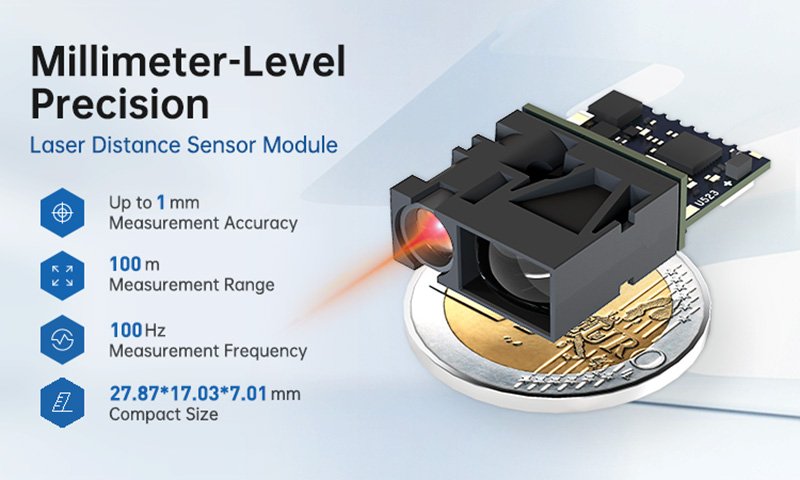
The LDL-T is a high frequency laser distance sensor capable of measuring distances up to 100 meters while maintaining an accuracy of up to 1mm. Its maximum measurement frequency reaches 100Hz, making it suitable for fast-moving and real-time control applications.

Key advantages of the LDL-T include:

  • Long measurement range up to 100m
  • High measurement accuracy up to ±1mm
  • Measurement frequency up to 100Hz
  • Compact design for easy system integration
  • Stable performance in industrial environments

These features make the LDL-T an ideal solution for automation, robotics, and precision measurement systems where high-speed distance feedback is critical.

LDL-T HIGH FREQUENCY LASER DISTANCE SENSOR

How the LDL-T Fits High-Speed Applications

In automation systems requiring fast response, the LDL-T provides continuous, high-resolution distance data that helps controllers react instantly to changes. Its high accuracy ensures that increased speed does not compromise measurement quality.

For engineers seeking a reliable high accuracy laser distance sensor with high-frequency performance, the LDL-T offers a balanced combination of speed, precision, and stability.

결론

A High Frequency Laser Distance Sensor becomes essential when applications demand real-time feedback, fast motion tracking, and precise control. While 30Hz is often the minimum threshold for dynamic measurement, higher frequencies such as 100Hz provide even greater responsiveness for advanced systems.

By understanding application requirements and selecting a sensor designed for high-frequency operation, engineers can significantly improve system performance. Solutions like the LDL-T demonstrate that high speed and high accuracy can coexist, enabling smarter and more efficient automation.

위로 스크롤