Trends in Laser Distance Measurement Technology for 2026
Laser distance measurement technology has become an essential component in modern automation, robotics, and smart sensing systems. As industries move toward higher efficiency and greater accuracy, the demand for advanced distance sensing solutions continues to grow. From factory automation to unmanned aerial vehicles (UAVs), laser measurement solutions are helping engineers achieve precise positioning, object detection, and real-time monitoring.
In 2026, the development of laser distance measurement technology is expected to accelerate with improvements in sensor miniaturization, measurement accuracy, and intelligent integration. These innovations are transforming the way distance data is captured and used across many industries.
This article explores the most important trends shaping the future of laser measurement systems.

1. Increasing Demand for High-Precision Measurement
Accuracy remains one of the most critical factors in modern sensing systems. Many industrial processes require millimeter-level precision to maintain efficiency and product quality.
Advancements in laser distance measurement technology now allow sensors to achieve extremely high accuracy while maintaining stable performance. Improved signal processing algorithms and advanced optical components are enabling sensors to measure distances with greater reliability even in challenging environments.
As a result, high-precision laser measurement solutions are widely used in:
- 산업 자동화
- Smart manufacturing
- Robotics positioning systems
- Automated logistics equipment
These improvements are also driving the evolution of laser rangefinder technology, allowing long-distance measurement systems to deliver better accuracy and faster response times.
2. Miniaturization of Sensors
Another major trend is the rapid development of compact sensor designs. Engineers increasingly require sensing modules that can be easily integrated into smaller devices without sacrificing performance.
The rise of the mini laser distance sensor has made it possible to integrate precise measurement capabilities into compact systems such as:
- Service robots
- Smart agricultural equipment
- handheld devices
- embedded automation systems
By reducing sensor size and power consumption, manufacturers are enabling new applications where traditional sensors were previously too large or complex to install.
Miniaturized laser sensors are particularly important in robotics and portable measurement tools, where space and weight limitations are critical factors.
3. Integration with Industrial Automation Systems
Industrial automation continues to be one of the largest application areas for laser measurement systems. Factories require reliable sensors to monitor positions, detect objects, and control production processes.
An industrial laser distance sensor module is commonly integrated into automated production lines, robotic arms, and material handling systems. These sensors provide real-time distance data that helps machines operate with higher efficiency and precision.
Modern sensors often support multiple communication interfaces such as:
- UART
- RS232
- RS485
- 모드버스
This flexibility allows engineers to easily integrate laser sensors into PLC systems, industrial computers, and embedded control platforms.
As Industry 4.0 continues to expand, the role of laser distance measurement technology in smart factories will become even more important.

4. Growth of Long-Range Laser Rangefinder Technology
Long-distance measurement is another area experiencing rapid innovation. Advanced laser rangefinder technology allows sensors to measure targets hundreds or even thousands of meters away.
These systems are widely used in applications such as:
- UAV altitude measurement
- terrain mapping
- environmental monitoring
- security and surveillance systems
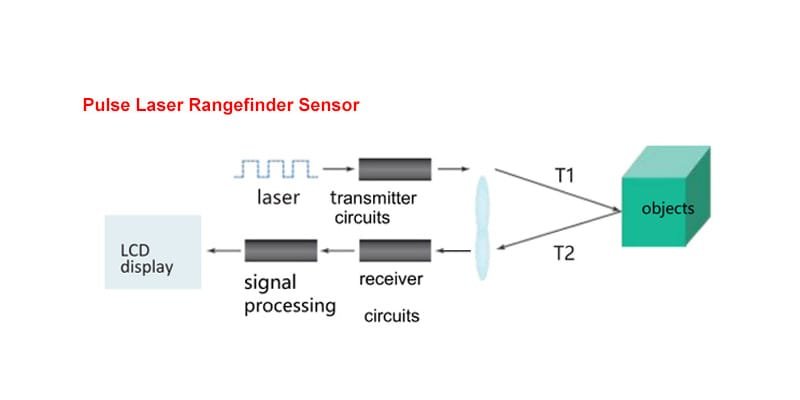
Modern laser rangefinder modules combine high-power laser emitters with sensitive receivers and intelligent signal processing. This enables stable performance even under strong sunlight or complex outdoor conditions.
As technology continues to evolve, future rangefinder modules are expected to deliver longer measurement ranges while maintaining compact designs and lower power consumption.
5. Higher Measurement Frequency and Real-Time Data
Another important trend in laser distance measurement technology is the increase in measurement speed. Many automation systems require fast response times to track moving objects or control high-speed equipment.
Modern laser sensors can now reach measurement frequencies of up to dozens of readings per second, allowing systems to capture real-time distance data.
High-frequency sensors are especially valuable in applications such as:
- automated guided vehicles (AGV)
- warehouse automation
- drone navigation
- industrial robotics
The combination of fast measurement and high accuracy is enabling smarter machines that can respond quickly to changing environments.
6. Expanding Applications Across Industries
The versatility of laser distance measurement technology is leading to rapid adoption across many sectors. Today, laser sensors are used not only in industrial environments but also in emerging smart technologies.
Common application areas include:
- robotics and autonomous systems
- smart transportation
- warehouse logistics
- precision agriculture
- UAV altitude measurement
With continued innovation in sensor design, both mini laser distance sensor solutions and industrial laser distance sensor module systems are expected to play an increasingly important role in future intelligent devices.

결론
As industries move toward smarter and more automated systems, laser distance measurement technology will remain a key sensing solution. Advances in precision, miniaturization, and measurement speed are enabling new possibilities for engineers and system integrators.
From compact sensors used in embedded systems to advanced laser rangefinder technology designed for long-distance measurement, the future of laser sensing is becoming more powerful and versatile.
In 2026 and beyond, continued innovation in laser sensor design will help drive the next generation of intelligent machines and automation technologies.
FAQ
What is laser distance measurement technology?
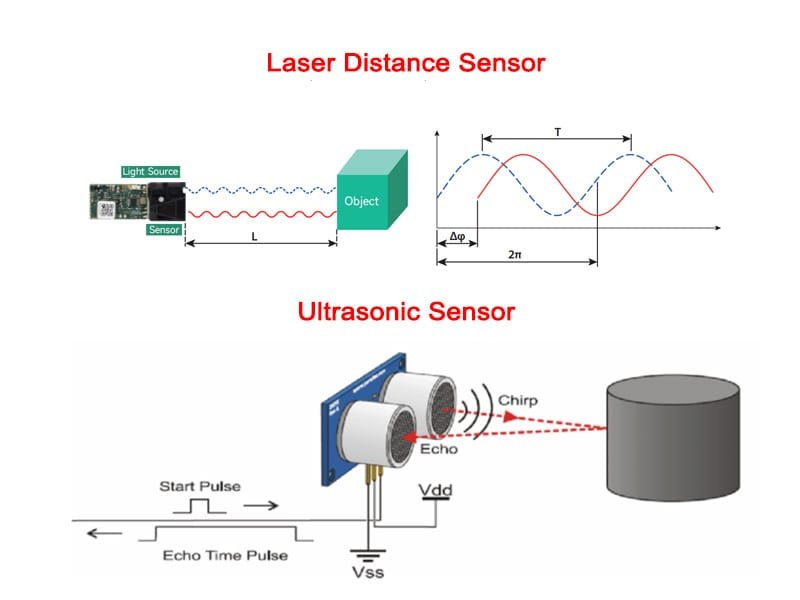
Laser distance measurement technology uses laser beams to measure the distance between a sensor and a target. By analyzing the reflected light signal, the system can calculate precise distance data for various applications.
Where are laser distance sensors commonly used?
Laser distance sensors are widely used in industrial automation, robotics, UAV systems, smart logistics, and precision measurement applications.
What is the advantage of a mini laser distance sensor?
A mini laser distance sensor offers high accuracy in a compact design, making it ideal for embedded systems, robots, and portable devices where space is limited.
What is an industrial laser distance sensor module?
An industrial laser distance sensor module is designed for integration into automation equipment, providing accurate and stable distance measurement for factory and manufacturing environments.