High Precision Industrial Sensors for Factory Automation in 2026
As smart manufacturing continues to evolve, industrial sensors are becoming one of the most important technologies in modern factory automation systems. In 2026, manufacturers are demanding faster production speeds, higher precision, real-time monitoring, and more intelligent automation solutions. To meet these requirements, advanced sensing technologies such as laser measurement sensors, industrial laser rangefinders, and compact laser distance modules are being widely adopted across multiple industries.

From robotic arms and AGV systems to warehouse automation and intelligent production lines, high precision industrial sensors are helping factories improve efficiency, reduce operational costs, and enhance production accuracy. As Industry 4.0 and smart factory concepts continue to expand globally, laser-based sensing solutions are playing a key role in next-generation industrial automation.
Why Industrial Sensors Matter in Smart Factories
Industrial automation relies heavily on accurate real-time data. Without reliable sensors, machines cannot detect object positions, monitor movement, or perform automated control functions efficiently.
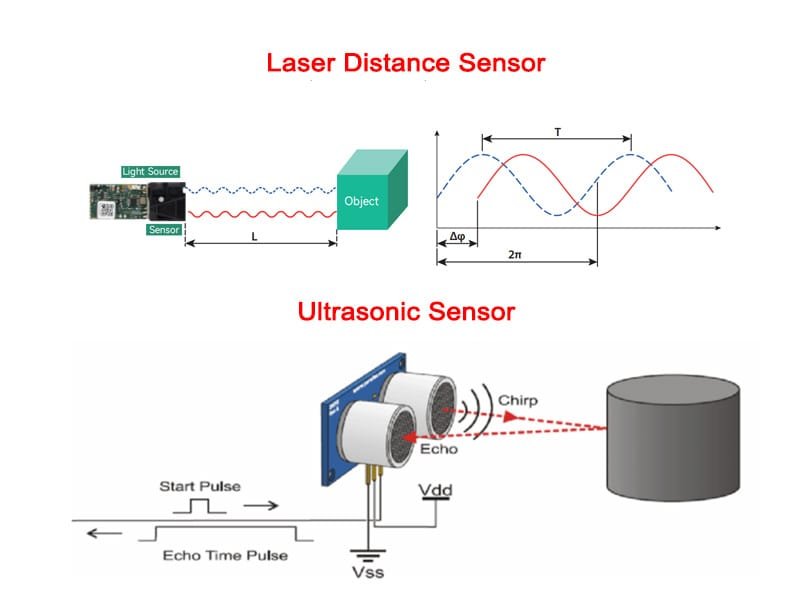
Traditional sensing technologies such as ultrasonic sensors and mechanical switches still exist in some industrial systems, but they often struggle in environments requiring high precision, fast response speed, or long-distance measurement.
Modern industrial sensors offer several advantages:
- Higher measurement accuracy
- Faster response time
- Better stability
- Mesure sans contact
- Real-time monitoring capability
- Easy integration into automation systems
Among these technologies, laser measurement sensors have become increasingly popular because they provide highly accurate distance measurement while maintaining compact size and low power consumption.
The Growing Demand for Laser Measurement Sensors
In recent years, laser measurement sensor technology has advanced rapidly. Compact laser sensors can now achieve millimeter-level precision while supporting high-speed data transmission and long measuring distances.
Factories are increasingly using laser sensors for:
- Position detection
- Robot navigation
- Conveyor monitoring
- Automated storage systems
- Production line inspection
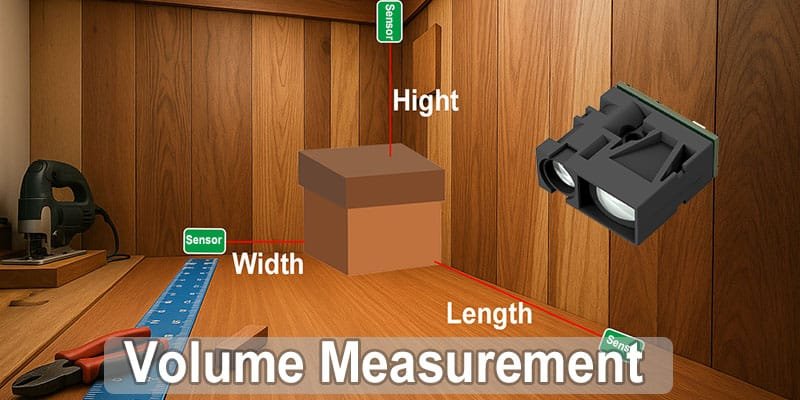
- Material positioning
- Collision avoidance systems
Compared with traditional sensors, laser distance measurement technology provides higher reliability and stronger anti-interference performance in industrial environments.
For example, phase-shift modules de distance laser can achieve extremely stable ranging performance even under complex lighting conditions. Their ability to deliver continuous and accurate distance data makes them ideal for industrial automation applications.
Industrial Laser Rangefinders in Factory Automation
Industrial laser rangefinders technology is no longer limited to outdoor surveying or military applications. In 2026, industrial laser range finder are widely integrated into smart manufacturing systems and intelligent machinery.

These sensors are used in:
Véhicules à guidage automatique (AGV)
AGVs require accurate environmental sensing to navigate safely through warehouses and production facilities. Industrial laser sensor help AGVs detect obstacles, calculate positioning, and optimize navigation paths in real time.
Robotic Automation
Industrial robots depend on high precision sensors to improve operational accuracy. Laser distance modules enable robotic systems to perform accurate object detection, arm positioning, and automated movement control.
Smart Warehousing
Modern warehouse automation systems use laser distance measurement sensors for pallet positioning, shelf detection, and inventory movement monitoring. Real-time ranging data helps improve logistics efficiency and reduce manual labor costs.
Intelligent Transportation Systems
Industrial laser sensors are also widely used in smart transportation and rail systems for distance monitoring, positioning, and automated safety control.
Why Compact Laser Distance Modules Are Trending
One major trend in 2026 is the growing demand for compact laser distance sensor solutions.
Manufacturers increasingly prefer miniature sensors because they can be integrated into:
- Small robotics systems
- Embedded industrial devices
- Portable equipment
- UAV systems
- Smart IoT devices
Compact laser modules provide several important benefits:
Easy System Integration
Small sensor size allows engineers to integrate laser measurement technology into limited installation spaces.
Lower Power Consumption
Modern laser distance sensor module are designed for energy-efficient operation, making them suitable for battery-powered systems and portable devices.
High Precision Performance
Despite their compact structure, advanced laser sensors can still achieve high accuracy, fast response speed, and stable performance.
Flexible Communication Interfaces
Many industrial laser sensors support TTL, RS232, RS485, Bluetooth, and other communication protocols, simplifying integration with PLCs, Arduino, Raspberry Pi, and industrial controllers.
Phase-Shift Laser Measurement Technology
Phase-shift measurement technology is widely used in high precision industrial sensors because it provides stable and accurate ranging performance.
The principle works by calculating the phase difference between emitted and reflected laser signals.
d=cΔϕ4πfd=\frac{c\Delta\phi}{4\pi f}d=4πfcΔϕ
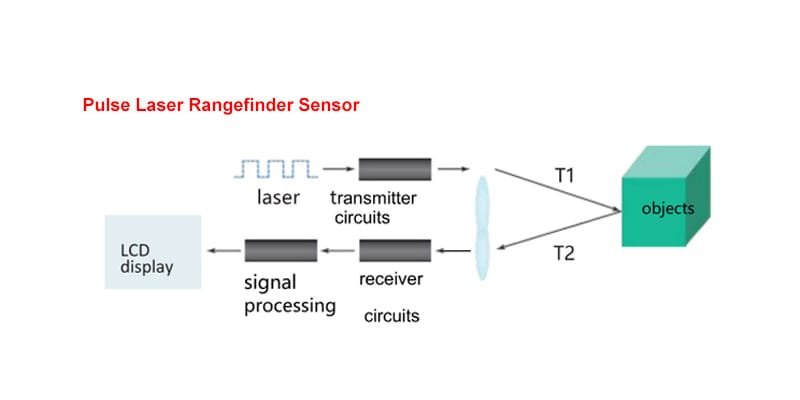
Compared with traditional time-of-flight technologies, phase-shift sensors often provide:
- Higher short-range accuracy
- Faster measurement frequency
- Better repeatability
- Improved stability in industrial environments
This technology is especially suitable for factory automation systems requiring millimeter-level precision.
Applications of Industrial Laser Sensors in 2026
As factories become smarter and more automated, industrial Laser sensors are expanding into more application scenarios.
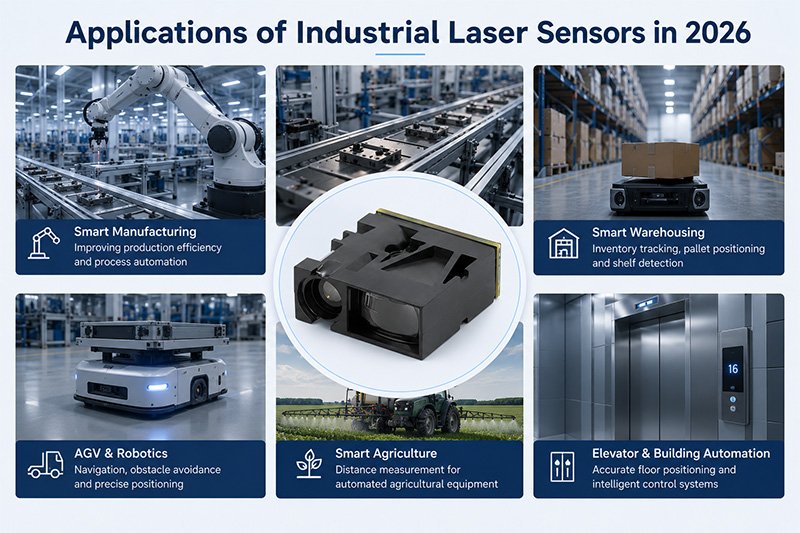
Fabrication intelligente
Factories use laser measurement sensors to improve production efficiency, automate inspection processes, and optimize machine control systems.
Automated Production Lines
Industrial sensors enable precise object positioning and real-time monitoring during manufacturing operations.
Robotics and Cobots
Collaborative robots rely on accurate sensing systems for safe interaction and automated movement.
Smart Agriculture Equipment
Laser distance modules are also used in agricultural automation systems for positioning, obstacle detection, and intelligent machinery control.
Elevator and Building Automation
Industrial laser sensors help improve elevator positioning accuracy and building automation efficiency.
Choosing the Right Industrial Sensor
When selecting industrial sensors for automation projects, manufacturers should consider several factors:
- Plage de mesure
- Accuracy requirements
- Response speed
- Interface de communication
- Environmental conditions
- Power consumption
- Integration flexibility
For applications requiring high precision and compact structure, laser distance sensor modules are often the preferred solution.
Sensors supporting RS485, TTL, and Bluetooth interfaces can be easily integrated into existing industrial control systems and smart factory platforms.
The Future of Industrial Sensors
The future of industrial automation will continue to rely on smarter, smaller, and more precise sensing technologies.
As AI-driven manufacturing and intelligent robotics continue to grow, demand for high precision industrial sensors will increase significantly. Compact laser distance measurement sensors and industrial laser rangefinder are expected to become essential components in next-generation factory automation systems.
Manufacturers that adopt advanced laser sensing technology can improve operational efficiency, reduce downtime, enhance production quality, and accelerate automation upgrades.
With the continued development of smart manufacturing, modules de capteurs de distance laser will play an increasingly important role in the future of industrial automation.
Conclusion
Industrial sensors are transforming factory automation in 2026 by enabling smarter, faster, and more accurate manufacturing systems. From laser distance measurement sensors and industrial laser rangefinders to compact laser distance sensor modules, advanced sensing technology is helping industries improve efficiency and automation performance.
As smart factories continue to evolve, high precision laser sensing solutions will remain a critical technology for industrial automation, robotics, logistics, transportation, and intelligent manufacturing applications.