Laser Sensor vs Infrared Sensor What Is the Difference
Distance sensing technology plays a critical role in modern automation systems, robotics, and smart devices. Among the most widely used sensing technologies are sensores láser y infrared sensors. Both technologies are commonly used for distance detection and object recognition, but they operate based on different principles and offer different performance characteristics.
Comprender la laser sensor vs infrared sensor comparison can help engineers and system integrators choose the right technology for their specific applications. This article explains the working principles, accuracy, advantages, and practical use cases of these two sensing technologies.

What Is a Laser Sensor
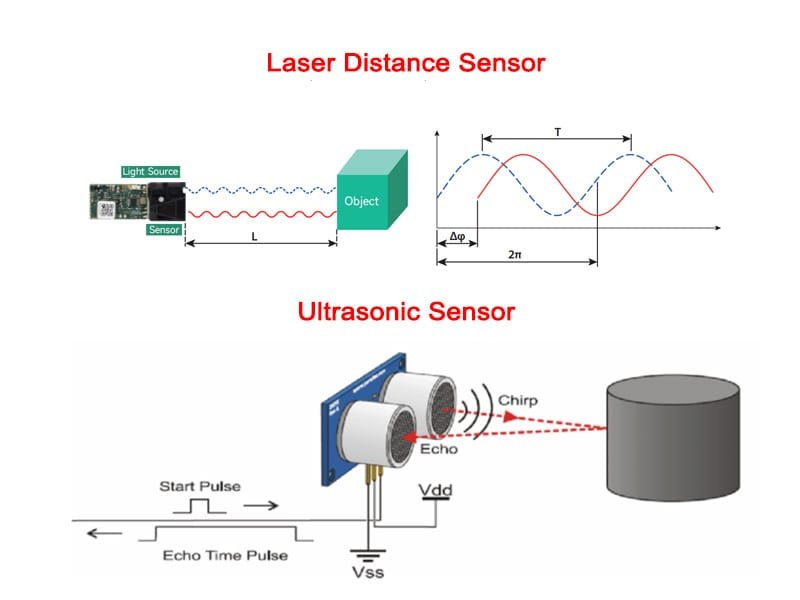
A sensor láser is a device that measures distance or detects objects using a focused laser beam. The sensor emits a narrow laser signal toward a target and calculates the distance by measuring the time or phase difference of the reflected light.
Most modern laser sensors use technologies such as:
- Tiempo de vuelo (ToF)
- Phase shift measurement
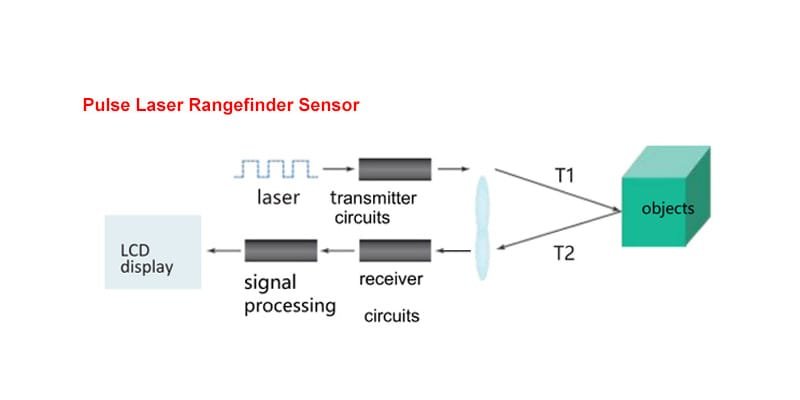
- Pulse laser measurement
Because the laser beam is extremely narrow and highly directional, laser sensors can provide precise and stable measurements even at relatively long distances.
Laser sensors are widely used in:
- industrial automation systems
- navegación robótica
- warehouse automation
- smart agriculture
- UAV altitude measurement
In many industrial applications, a laser distance sensor vs infrared sensor comparison often shows that laser sensors offer higher measurement precision and longer detection range.
What Is an Infrared Sensor
An infrared sensor, often called an IR sensor, detects objects or measures distance by emitting infrared light and detecting the reflected signal from a target surface.
Infrared sensors typically operate using one of two methods:
- reflective IR detection
- triangulation-based distance measurement
Unlike laser sensors, infrared sensors usually emit a wider light beam. Because of this wider detection area, infrared sensors are commonly used for short-range detection tasks.
Typical applications include:
- obstacle detection systems
- automatic doors
- consumer electronics
- proximity sensing
- smart home devices
When comparing infrared distance sensor vs laser distance sensor, infrared sensors are usually simpler and more affordable but offer lower measurement accuracy.
Laser Sensor vs Infrared Sensor Principio de funcionamiento
En difference between laser sensor and infrared sensor begins with how they generate and detect light signals.
Laser sensors use a highly focused laser beam that travels in a straight line and reflects precisely from a target surface. The sensor calculates the distance based on the reflected beam’s travel time or phase difference.
Infrared sensors emit infrared light that spreads across a wider area. The sensor detects reflected infrared energy and estimates distance based on signal intensity or triangulation.
Because the laser beam is narrow and coherent, laser sensors generally provide more stable and precise distance measurements.
Laser Sensor vs Infrared Sensor Accuracy
Accuracy is often the most important factor when comparing sensing technologies.
In many applications, the laser sensor vs ir sensor accuracy comparison shows that laser sensors provide higher precision because the laser beam can target a specific point with minimal signal dispersion.
Laser sensors can achieve millimeter-level accuracy in many industrial measurement systems.
Infrared sensors are usually designed for short-range detection rather than high-precision measurement. Environmental factors such as ambient light, surface reflectivity, and temperature may affect infrared sensor readings.
For systems requiring precise measurement and reliable distance data, laser sensors are typically the preferred choice.
Laser Sensor vs Infrared Sensor Range
Another key factor in the infrared sensor vs laser sensor range comparison is measurement distance.
Laser sensors can measure objects over much longer distances because the laser beam remains concentrated over a long range. Industrial laser sensors can detect targets from several meters to hundreds of meters depending on the design.
Infrared sensors generally operate at shorter distances, often within a range of a few centimeters to several meters.
Because of this limitation, infrared sensors are commonly used for close-range detection tasks such as proximity sensing.
Laser Sensor vs Infrared Sensor Applications
En laser sensor vs infrared sensor for distance measurement comparison highlights different application scenarios for these technologies.
Laser sensors are commonly used in:
- automatización industrial
- robotic positioning systems
- warehouse logistics systems
- drone altitude detection
- high precision measurement equipment
Infrared sensors are widely used in:
- automatic doors
- consumer electronics
- smart home devices
- obstacle detection systems
- proximity sensing applications
When considering laser sensor vs infrared sensor for object detection, the selection often depends on the required detection range and measurement precision.laser distance sensor vs infrared sensor

Laser Sensor vs Infrared Sensor Key Differences
The following table summarizes the most important differences between these sensing technologies.
| Característica | Laser Sensor | Infrared Sensor |
|---|---|---|
| Light source | Laser beam | Infrared light |
| Measurement precision | Alta | Moderado |
| Detection range | Long | Short |
| Beam focus | Narrow and precise | Wider beam |
| Typical use | Industrial measurement | Proximity detection |

This comparison clearly shows why laser sensors are widely used in precision measurement systems.
Which Sensor Should You Choose
Choosing between these two technologies depends on the requirements of your application.
A laser sensor is usually the better option when systems require:
- high precision distance measurement
- long detection range
- reliable industrial performance
- stable readings in complex environments
An infrared sensor may be the better solution when the application requires:
- simple object detection
- short-range sensing
- low cost implementation
- compact consumer electronics integration
Comprender la laser sensor vs infrared sensor industrial applications comparison helps engineers select the most efficient sensing technology for their projects.
Preguntas frecuentes
Is a laser sensor more accurate than an infrared sensor
Yes. In most distance measurement applications, laser sensors provide higher accuracy because they use a focused beam that allows precise targeting.
What is the difference between a laser sensor and an infrared sensor
The main difference is the light source and measurement method. Laser sensors use a focused laser beam for precise distance measurement, while infrared sensors use IR light for proximity or short-range detection.
When should infrared sensors be used
Infrared sensors are ideal for short-range object detection applications such as automatic doors, obstacle detection systems, and consumer electronics.
Are laser sensors used in industrial automation
Yes. Laser sensors are widely used in industrial automation systems for positioning, distance measurement, and object detection.