Laser Distance Sensor for Elevator Floor Detection Without API Integration
In modern smart buildings, elevators play a critical role in enabling efficient vertical transportation. However, when it comes to automation—especially for service robots such as delivery robots or hotel robots—integrating with elevator systems is often a major challenge. Many buildings, particularly hotels, apartments, and commercial offices, do not provide access to elevator control systems or APIs. This limitation makes it difficult for robots to determine their current floor position accurately.
To overcome this challenge, a laser distance sensor for elevator applications has emerged as a highly effective and non-invasive solution. By leveraging precise distance measurement technology, it becomes possible to achieve reliable elevator floor detection without requiring any integration with the elevator control system.

The Challenge of Elevator Floor Detection Without API Access
For autonomous robots operating indoors, knowing the exact floor level is essential. Whether it is a delivery robot transporting food in a hotel or a logistics robot moving goods in an office building, accurate positioning directly impacts efficiency and user experience.
Traditionally, elevator integration relies on:
- Direct access to elevator control systems
- API-based communication with building infrastructure
- Pre-installed IoT or sensor networks
However, in many real-world scenarios:
- Building owners restrict system access for security reasons
- Legacy elevators do not support modern APIs
- Integration costs are too high for deployment at scale
As a result, robots cannot rely on traditional methods for elevator floor detection, creating a critical bottleneck in automation.
How a Laser Distance Sensor for Elevator Solves the Problem
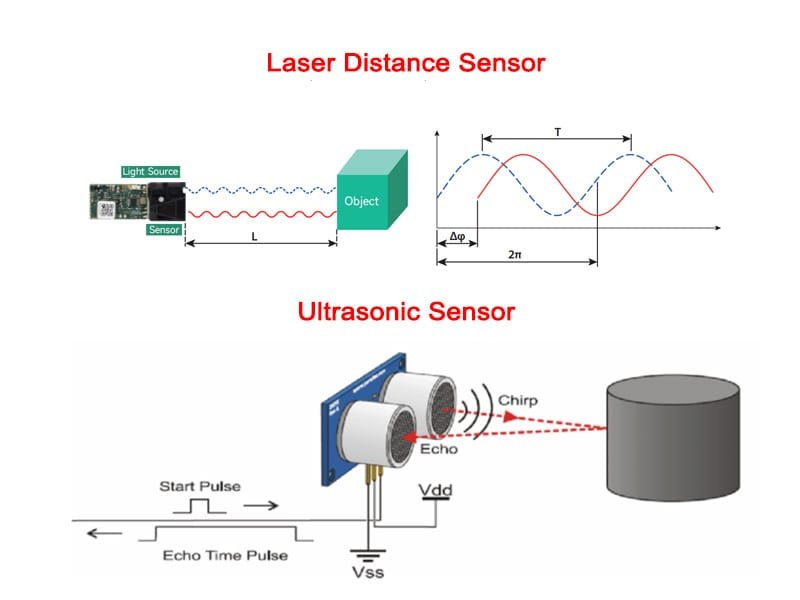
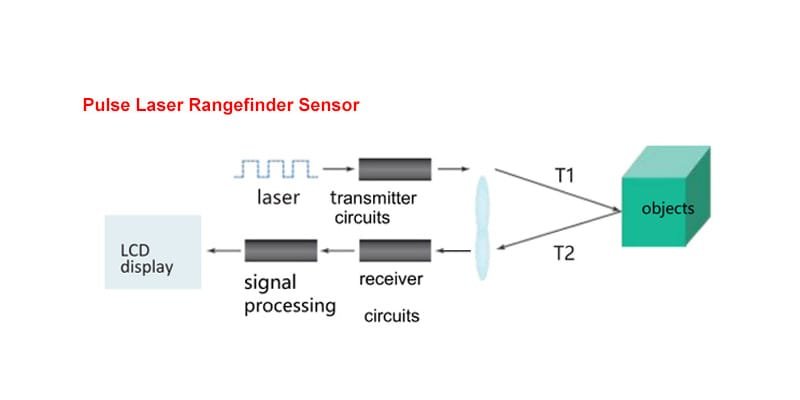
A laser distance sensor for elevator provides a simple yet powerful alternative by measuring vertical distance changes inside the elevator shaft.
مبدأ العمل
The concept is straightforward:
- The sensor is installed on top of the robot or inside the elevator cabin
- It continuously measures the distance to a fixed reference point (such as the top of the elevator shaft)
- As the elevator moves, the measured distance changes
- Since floor heights are fixed, each distance corresponds to a specific floor
By mapping distance values to known floor heights, precise elevator floor detection can be achieved in real time.
This method eliminates the need for system integration entirely, making it ideal for environments where API access is unavailable.
Why Choose LDJ Laser Distance Sensor for Elevator Applications
For this application, we recommend the LDJ laser distance sensor, which is specifically designed for high-precision and long-range measurement tasks.

Key Features of LDJ Sensor
- Long Measurement Range: حتى 200 متر
- دقة عالية: ±3 mm
- Stable Performance: Reliable in indoor environments with varying lighting conditions
- تصميم مدمج: Easy to integrate into robots or elevator cabins
- Multiple Interfaces: Compatible with embedded systems such as Arduino, ESP32, and industrial controllers
These features make the LDJ an ideal laser distance sensor for elevator scenarios, especially when precise and continuous elevator floor detection is required.
Advantages of Using Laser Distance Sensors in Elevators
Compared to traditional solutions, using a laser distance sensor for elevator applications offers several significant advantages:

1. No System Integration Required
The sensor operates independently, eliminating the need for API access or modifications to the elevator system.
2. High Precision and Reliability
With millimeter-level accuracy, the system ensures consistent and accurate elevator floor detection.
3. Real-Time Measurement
Continuous distance monitoring allows instant floor recognition during elevator movement.
4. Easy Deployment
Installation is simple and does not require complex infrastructure changes.
5. Cost-Effective Solution
Avoids expensive integration and reduces deployment costs for large-scale projects.
سيناريوهات التطبيق
The use of a laser distance sensor for elevator is highly versatile and can be applied across multiple industries:
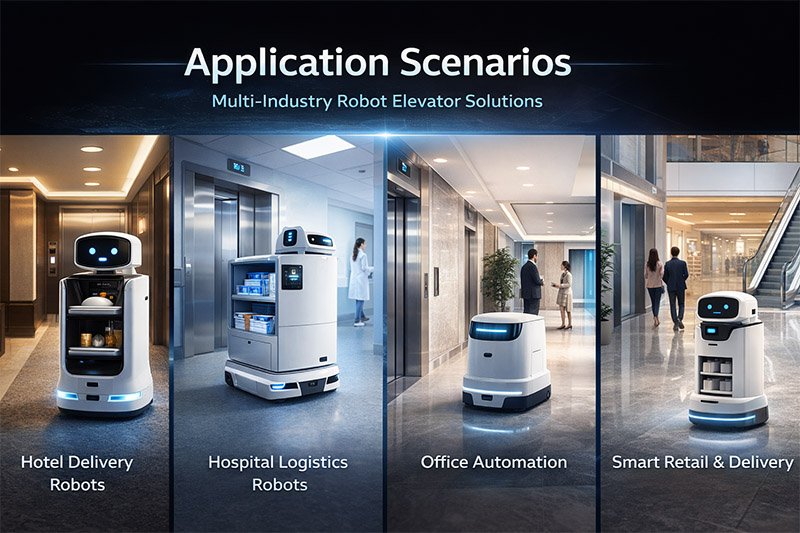
Hotel Delivery Robots
Service robots delivering food or amenities can accurately determine floor levels without relying on hotel elevator systems.
Hospital Logistics Robots
Medical supply robots can navigate between floors efficiently, improving operational workflows.
Office Building Automation
Robots used for document delivery or maintenance tasks benefit from reliable elevator floor detection.
Smart Retail and Warehousing
Autonomous systems in multi-level facilities can maintain precise vertical positioning.
Implementation Considerations
To achieve optimal performance in elevator floor detection, the following factors should be considered:
- Initial Calibration: Define a reference distance at a known floor
- Floor Height Mapping: Pre-configure floor-to-distance relationships
- Sensor Placement: Ensure stable mounting for accurate readings
- Data Processing: Use microcontrollers or PLCs to convert distance data into floor numbers
With proper setup, a laser distance sensor for elevator can deliver highly accurate and stable results in real-world environments.
Future of Elevator Automation with Laser Sensors
As smart buildings and robotics continue to evolve, non-invasive sensing technologies will play an increasingly important role. The use of a laser distance sensor for elevator applications represents a scalable and flexible approach to solving one of the most common challenges in indoor automation.
By enabling reliable elevator floor detection without system integration, this solution opens new possibilities for deploying robots in environments that were previously inaccessible.
الخاتمة
In environments where elevator APIs are unavailable, a laser distance sensor for elevator provides a practical and efficient solution for accurate elevator floor detection. With high precision, easy deployment, and no need for system integration, solutions like the مستشعر المسافة الليزري عالي الدقة are redefining how robots interact with vertical transportation systems.
For developers and system integrators looking to enhance robot navigation